

Getting started
To start building your workflow, select a template or start from scratch.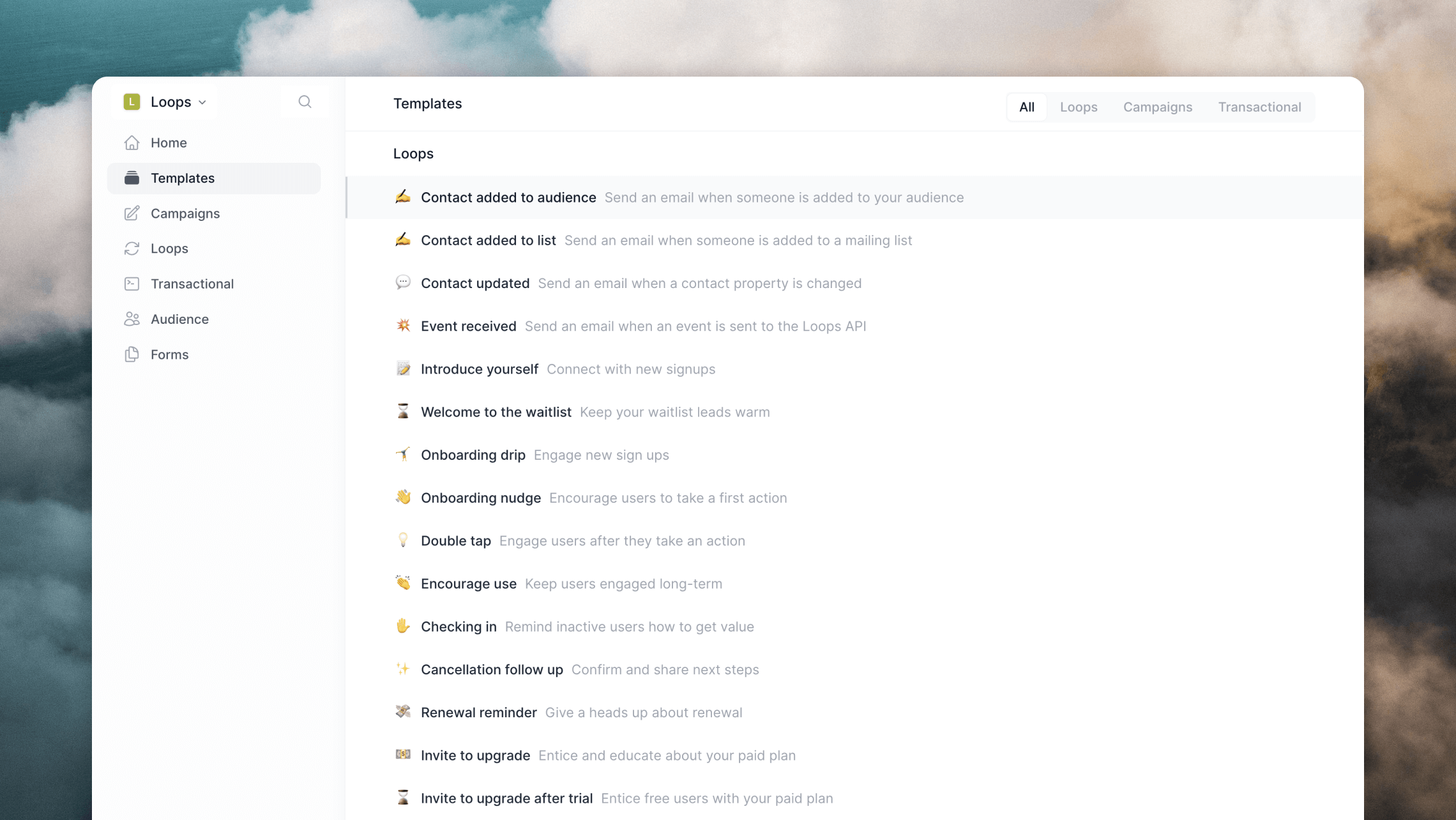
Building a workflow
A workflow is an email sequence that can be triggered by different events and contain emails, delay timers and branches. You can add new nodes to your workflow by hovering over an arrow between nodes and clicking the+ button.
More complex workflows can be built by adding branches.
Editor panels
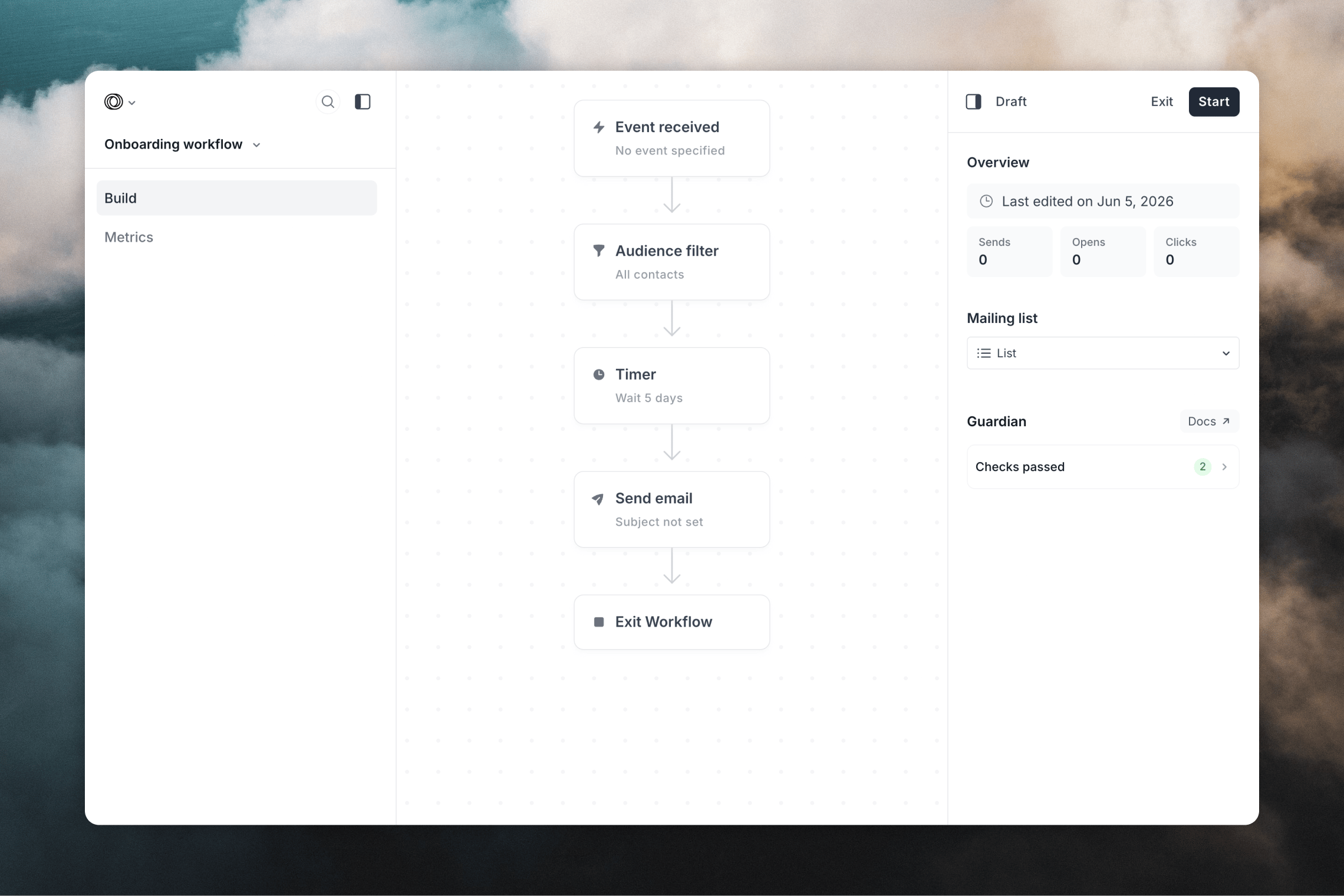
The workflow editor has a navigation panel on the left-hand side. This navigation panel provides a dropdown of workflows to jump to, a command search, and Build and Metrics views. The inspector panel on the right-hand side shows settings for the selected node, workflow status, and the Start and Pause toggle button. When nothing is selected, the inspector panel shows validation checks to make sure the workflow meets all the requirements to start running. You can collapse or expand either panel with its panel button. On desktop, press⌘/Ctrl + / to toggle both panels.
Zoom and canvas navigation
You can zoom in and pan around the workflow canvas, which makes it easier to work with larger and multi-branch workflows. Zoom and panning use typical trackpad and mouse gestures, so they should be familiar. On a trackpad- Pinch to zoom in and out
- Use two fingers to pan around the canvas
- Use
⌘/Ctrland the scroll wheel to zoom - Use the scroll wheel to pan vertically
- Use
Shiftand the scroll wheel to pan horizontally
Mailing lists
You can make a workflow send only to contacts on a specific mailing list by using the mailing list dropdown in the inspector panel. This makes sure that only contacts from that list are added to the workflow.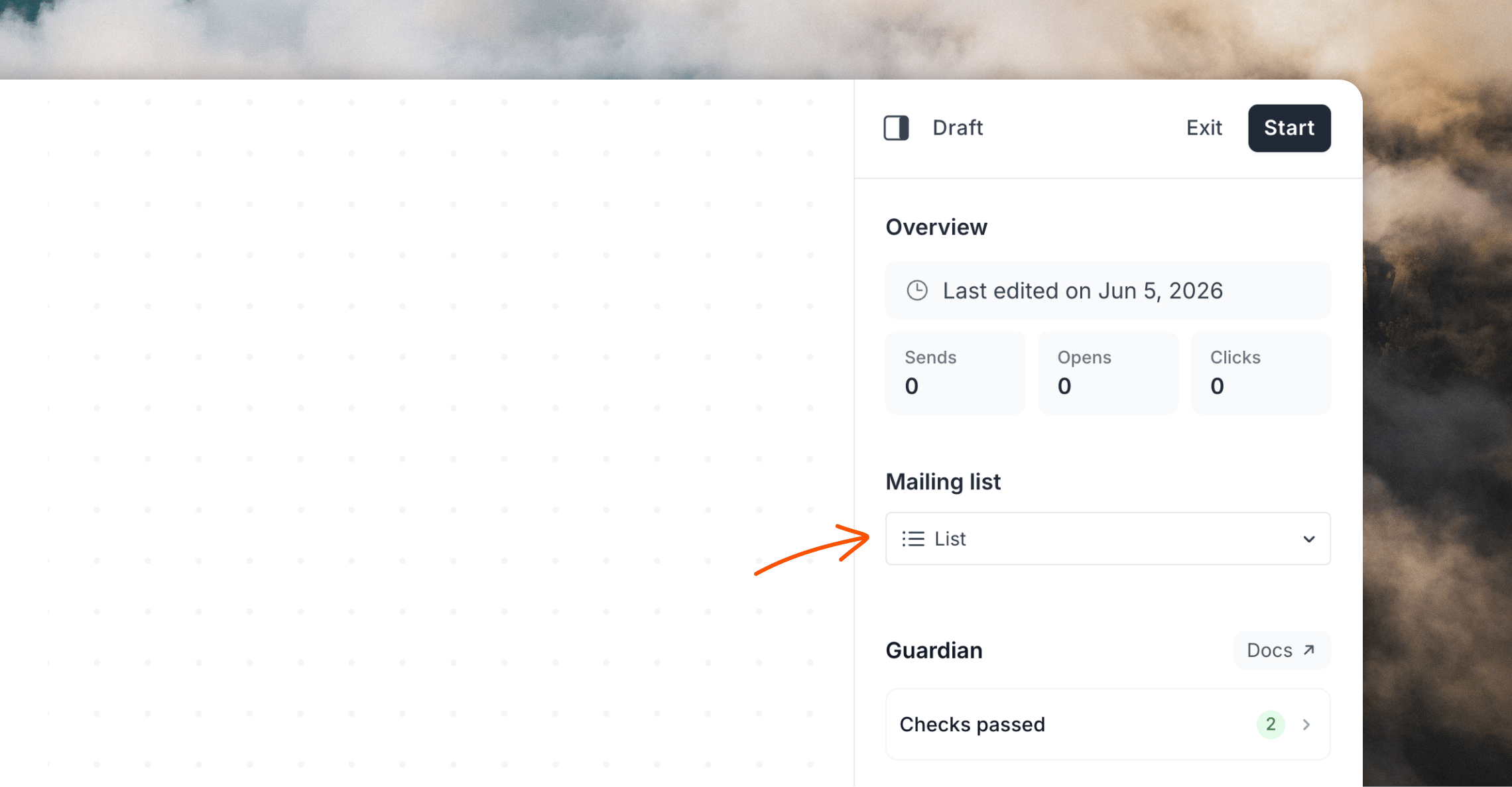
You can also change the selected list from the workflow summary
in the inspector panel.
Nodes
There are six types of nodes available in workflows:Triggers
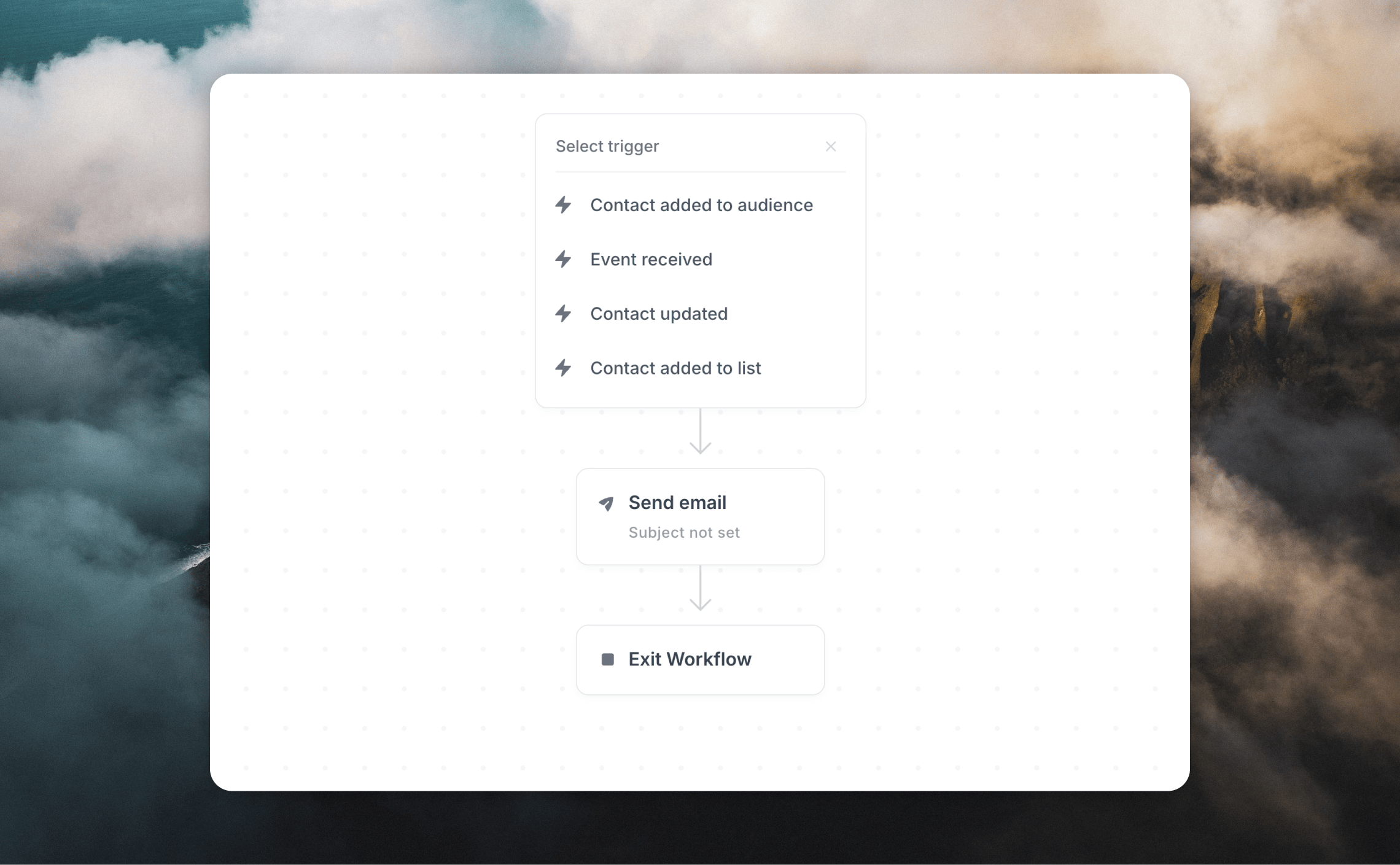
- Contact added: Triggered whenever a contact has been added to your audience.
Only contacts who have been added via a form, the API or an integration will be added based on this trigger. Contacts added individually to the audience table will not be included. Contacts added or updated via CSV will only trigger if you select the Trigger workflows toggle during upload.
- Contact updated: Triggered whenever a contact property changes from one value to another. Can also conditionally trigger only if the previous property matches the inputted value.
- Contact added to list: Triggered whenever a contact is added to a certain mailing list. You can select the list from the trigger node.
- Event received: Triggered when a certain event is sent to Loops by the API or an integration. With this trigger you can start a workflow based on interactions in your app. Common custom events are
signUp,canceledandactivated.
Emails
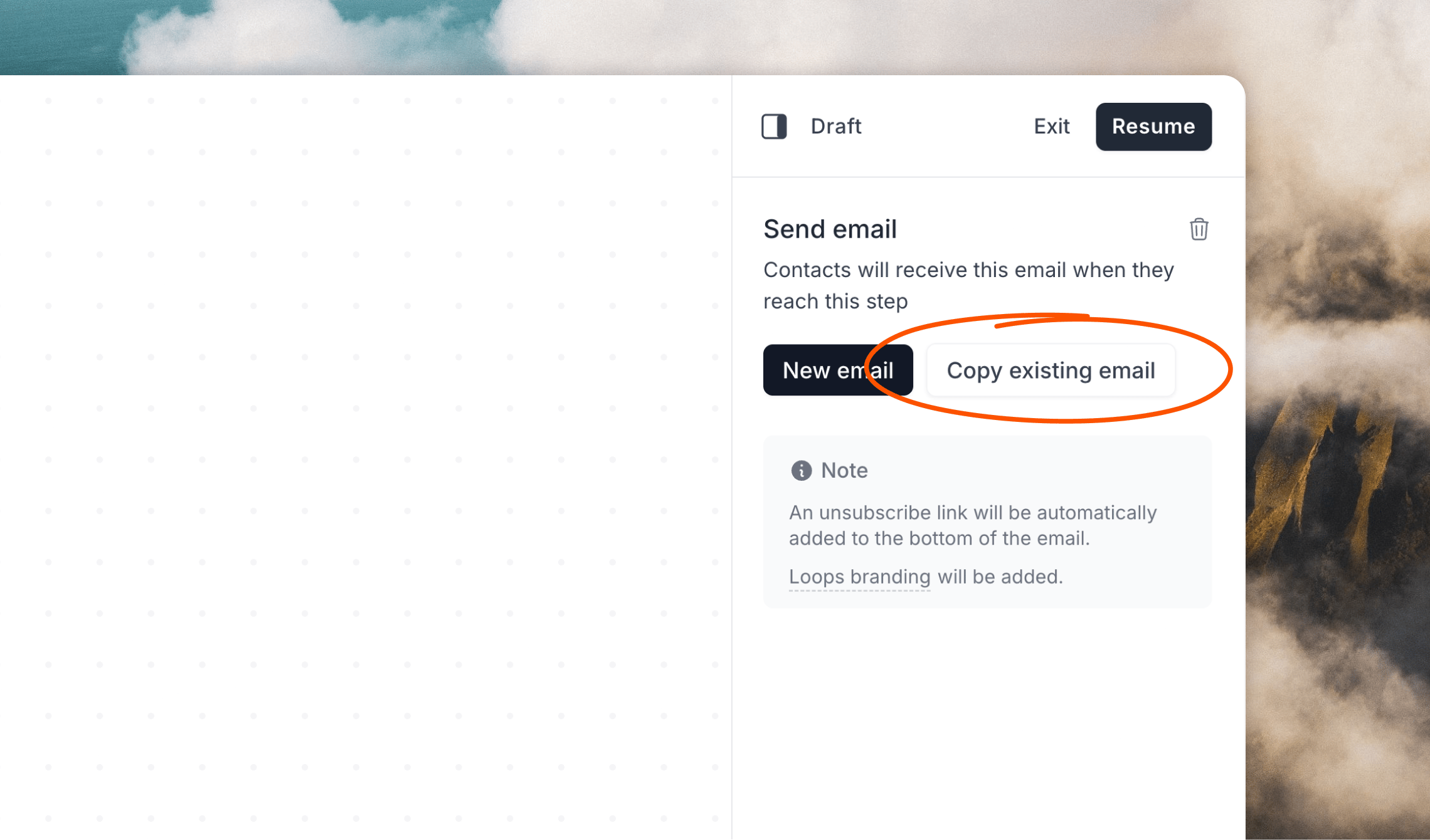
You can add emails at any location inside your workflow, giving you flexibility to send mail immediately after the trigger or after a delay. You can also send to specific contacts by adding an audience filter, or by branching your workflows.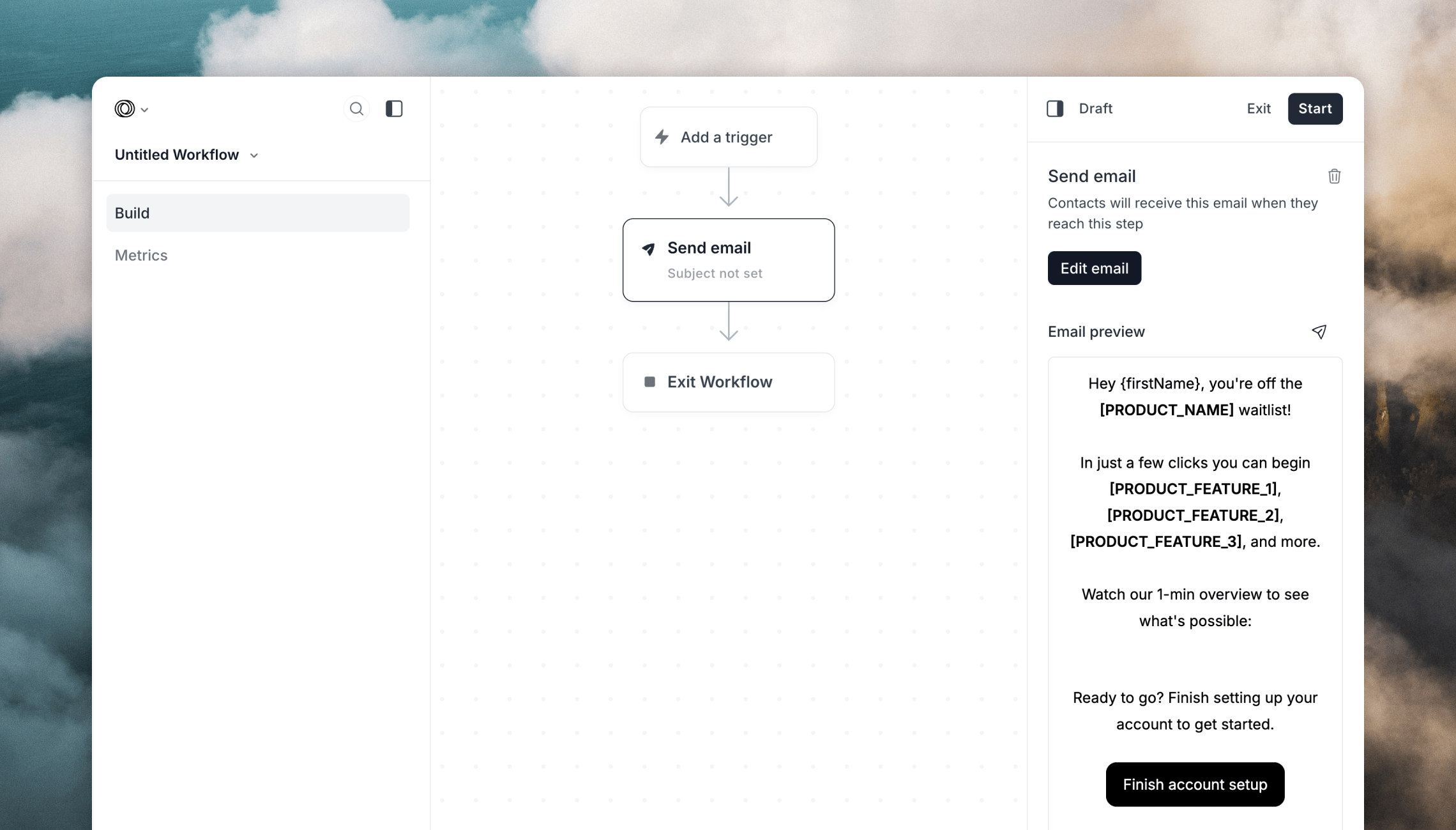
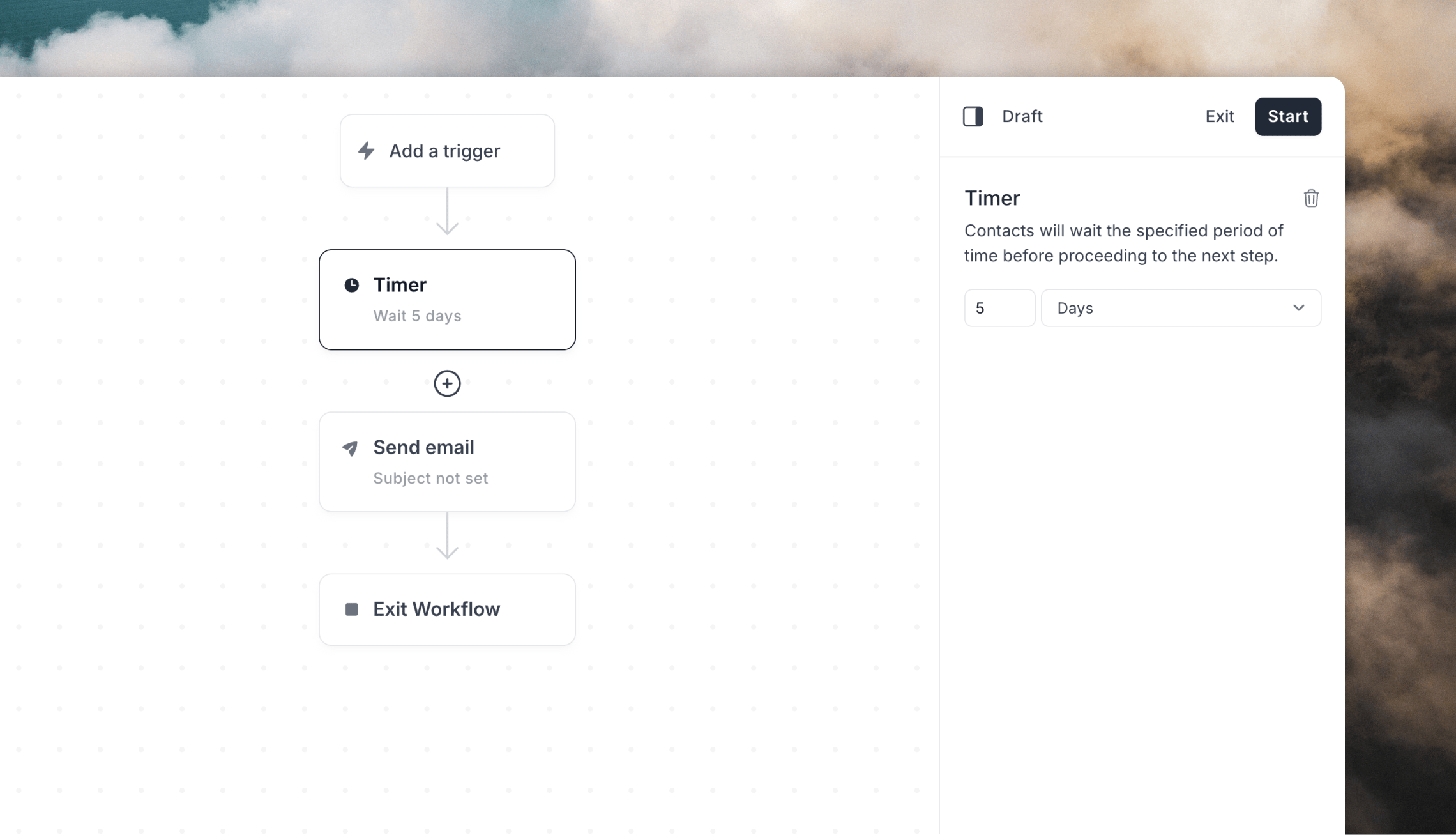
Timers
Audience filters
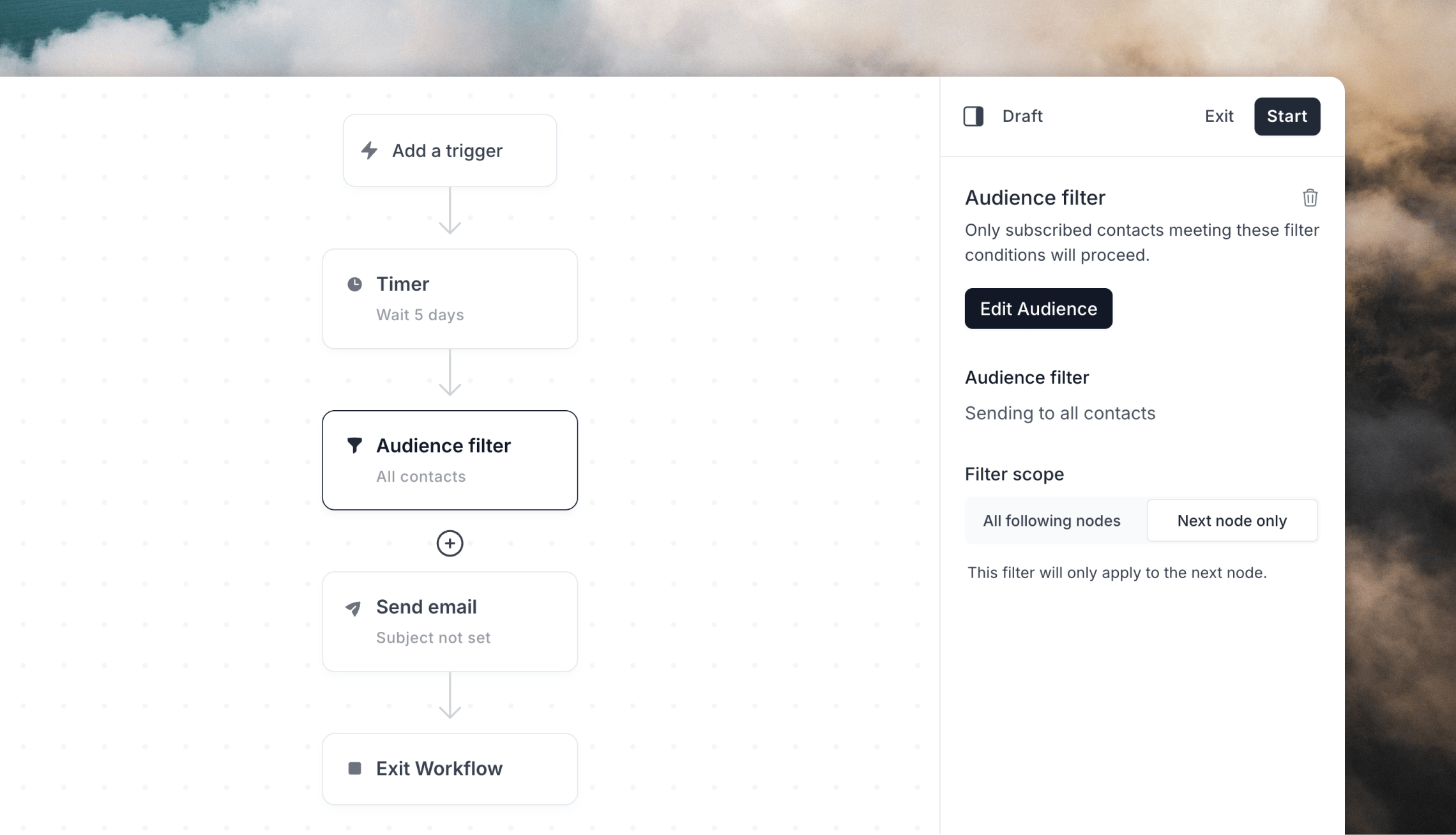
signup, the Timer duration to 3 days, and the audience filter to paid equals false.
There are two options for applying audience filters:
- All following nodes: this will apply the filter when contacts reach every following node. If a contact no longer matches the filter’s audience when they reach a following node, they will be removed from the workflow.
- Next node only: this will apply your filter before contacts reach the next node. This is a one-time filter and any changes to the contact’s value after the filter will not be taken into account.
Branching workflows
Learn how to branch workflows using audience filters.
Metrics
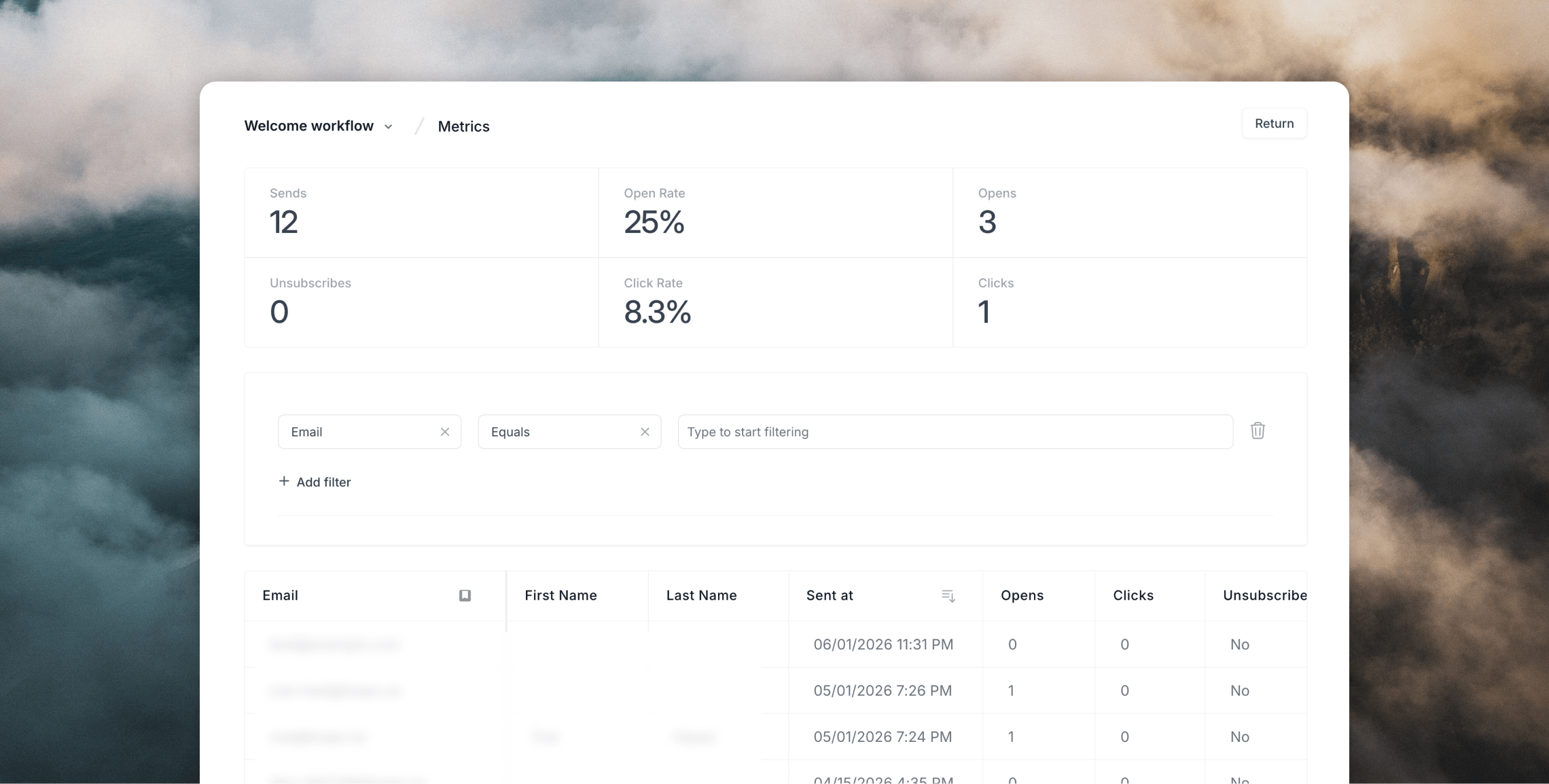
Click Metrics in the navigation panel to view simple metrics inline within the builder.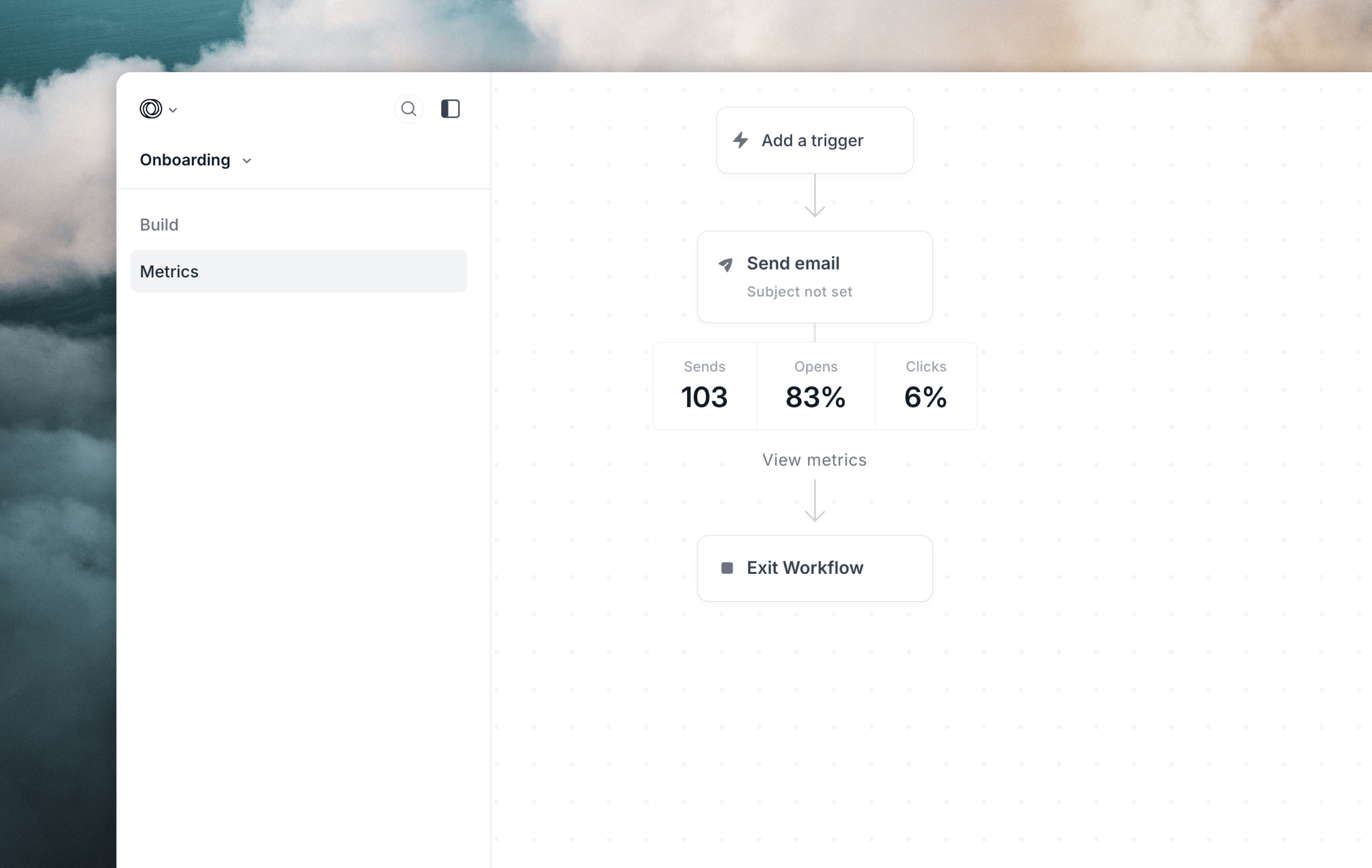
Testing workflows
You can test if a workflow works as expected by using email addresses with@example.com and @test.com domains (for example test@example.com).
First, add these as contacts in your audience, then depending on how your workflows are set up, you can add and update properties, or send events to these email addresses to see how contacts move through your workflows.
Emails will not be sent to @example.com or @test.com email addresses so this is a good method to test emailing contacts without affecting your sending domain’s reputation.
You can also send test emails for each of the emails in a workflow. Click on an email node and then the Send a preview airplane icon in the Email preview section of the inspector panel.